Kuala Lumpur
An underrated capital where Malay, Chinese, and Indian cultures meet over superb food. When to visit Kuala Lumpur, what to do, and where to eat.
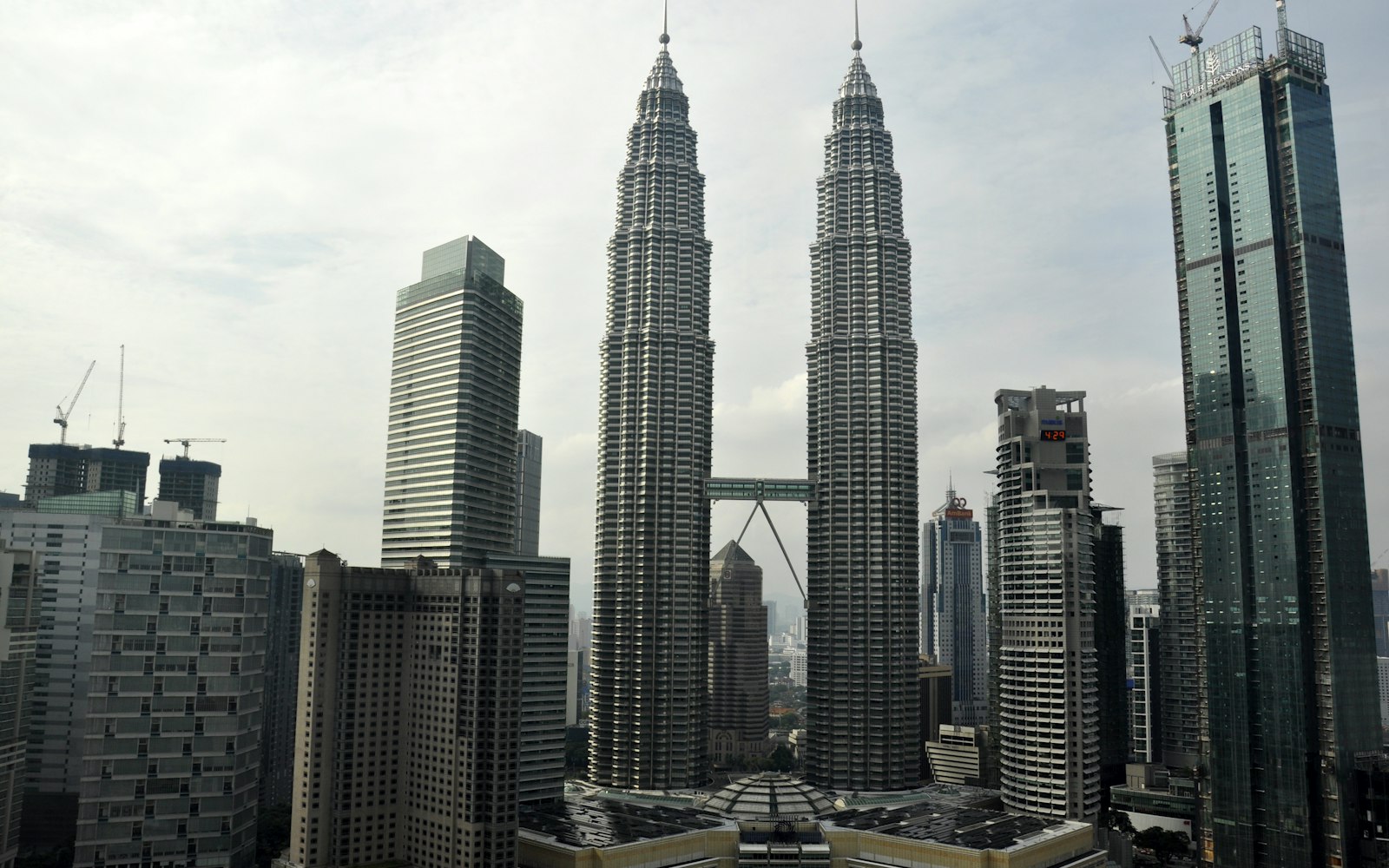
Kuala Lumpur is the Southeast Asian capital that people keep skipping, usually on a fast connection to a beach somewhere. That is a mistake. Give it a few days and the city reveals itself as a place where three cultures live side by side and cook for the same table: Malay, Chinese, and Indian, layered over a colonial grid and topped with some of the tallest towers in the world.
You feel it in the noise. A muezzin’s call drifts over a Chinese coffee shop while the smell of frying dosa comes from the next block. KL is humid, sometimes chaotic, and not conventionally pretty, but it is generous, cheap by regional standards, and easy to like once you stop expecting a postcard.
When to go
There is no cool season here. The city sits close to the equator, so expect hot, sticky days and warm nights all year, usually broken by a heavy afternoon or evening storm that clears as fast as it arrives. Those downpours are part of the rhythm, not a reason to stay home. Carry a small umbrella and plan indoor time for mid-afternoon.
Conditions are relatively drier and steadier around June and July, which makes those months a comfortable window, though never a truly dry one. The wetter months later in the year bring more sustained rain without ever shutting the city down. If your trip lands during Ramadan, the daytime rhythm slows and some restaurants keep shorter hours, but the trade-off is wonderful: the Ramadan bazaars that appear across the city at dusk are among the best casual eating you will do all trip. Go respectfully, follow the crowd, and come hungry.
What to do
The obvious landmark earns its fame. The Petronas Twin Towers are genuinely striking, two silver spires joined by a skybridge, and the KLCC park at their feet is where locals actually gather at dusk for the fountains and the cooler air. You do not have to go up to enjoy them; the view from the park is the one on the postcards.
For something older and stranger, head north to Batu Caves, a Hindu shrine set inside a vast limestone cave at the top of a long, steep staircase now painted in bright rainbow colors. A giant gold statue stands guard at the base. Mind the resident macaques, who will help themselves to anything loose, and dress modestly since it is an active place of worship.
Back in town, Bukit Bintang is the commercial heart, a walkable tangle of malls, hotels, and street stalls that runs from air-conditioned luxury to plastic stools in a single block. Nearby, the old core around Chinatown and Petaling Street offers a covered market lane of copycat stalls and excellent, unglamorous food, while the restored Central Market next door is a calmer place to browse crafts and batik. For a quieter afternoon, the Islamic Arts Museum near the Lake Gardens is one of the finest of its kind anywhere, with manuscripts, textiles, and scale models under soaring domed ceilings.
What to eat
Here is the real reason to come. KL’s food is the everyday product of its mixed population, and it is spectacular. Start with nasi lemak, the unofficial national dish of coconut rice, sambal, fried anchovies, and egg, eaten at any hour. Chase it with roti canai, a flaky flatbread griddled to order and dipped in dal, from any Indian-Muslim shop. Sit down for a banana-leaf meal in Brickfields, the city’s Little India, where rice and a spread of curries arrive on a fresh leaf and refills are the norm. And do not leave without a plate of char kway teow, smoky stir-fried noodles that a good hawker makes look effortless.
The best show is after dark on Jalan Alor, a street off Bukit Bintang that turns into an open-air canteen every night, tables spilling across the road under strings of red light. It is touristy and a little pricier than a neighborhood stall, but the energy is real and the grilled seafood is good. To see how KL fits the wider region, our guide to street food across Southeast Asia is a useful map. Serious eaters should also budget a few days for Penang up the coast, the one city Malaysians will tell you eats even better.
Where to base yourself
Two neighborhoods make sense for a first visit. Bukit Bintang puts you in the middle of the eating and shopping, walkable to Jalan Alor and well connected by monorail, at the cost of some late-night noise. KLCC, around the towers, is glossier and calmer, with easy park access and quick transit links, though it leans more corporate. Either works: pick Bukit Bintang for food and buzz, KLCC for a quieter base.
Getting around
KL is spread out and the heat makes long walks punishing, so lean on the rail network. The monorail and the LRT lines cover most of what a visitor needs and are cheap and easy, if occasionally crowded and not always joined up cleanly between systems. Fill the gaps with Grab, the region’s ride-hailing app, which is inexpensive and spares you the metered-taxi haggling. Traffic can be heavy, so time longer rides around the rush hours.
The city’s other quiet superpower is its airport. KL is a major budget-airline hub, which makes it one of the cheapest launch pads in Asia. A short, low-cost flight puts you on an island, in the Borneo rainforest, or across the border in Singapore down the peninsula, so it pays to treat the capital as both a destination and a gateway.
Give Kuala Lumpur the couple of days it deserves and it stops feeling like a layover. It is a working, eating, praying, shopping city that rewards curiosity over sightseeing, and you will likely leave already planning the meals you would order on a return trip.
Line up the season with our guide to the best months to visit Southeast Asia, then sort transport withgetting around the region.