Getting around Southeast Asia: trains, buses, ferries, and apps
Moving around the region is cheap and easy once you know the toolkit: budget flights, sleeper trains, ferries, and the ride-hailing apps that change everything.
The first thing that surprises most travelers here is how little it costs to cover a lot of ground. A flight between capitals can cost less than a nice dinner back home, a night train delivers you to a new city while you sleep, and a phone app summons a car in minutes for a fare you agreed to before getting in.
The trick is knowing which tool fits which leg. Distances that look punishing on a map often shrink to a short flight, and routes that seem simple can turn into a full day of transfers. Here is the toolkit, and when to reach for each part of it.
Flying between countries
Southeast Asia runs on low-cost carriers. AirAsia, Scoot, VietJet, Cebu Pacific, and Lion Air connect dozens of cities for fares that stay cheap if you book ahead and travel light. The big hubs are Kuala Lumpur, Singapore’s Changi, and Bangkok, and from any of the three you can reach almost anywhere in the region on a single ticket.
The catch is baggage. Headline fares almost never include a checked bag, and airport counters charge steeply for anything you did not add online. Buy your allowance when you book, weigh your bag before you leave, and read the cabin limit, which some carriers enforce with a bracket at the gate. Add the cost of a bag, a seat, and transport to airports that often sit far from the city, and a “cheap” flight can quietly stop being cheap.
Trains worth taking
Trains are the most civilized way to cover long distances, and a few routes are worth planning a trip around. Thailand’s overnight sleepers, especially Bangkok up to Chiang Mai, come with proper berths and curtains, and you wake up somewhere new having paid for a hotel night in transit.
Vietnam’s Reunification Express runs the length of the country, and the coastal stretch between Danang and Nha Trang is one of the great rail rides anywhere, with the track hugging the sea. Book a soft sleeper for the long legs out of Hanoi. The newer China-to-Laos railway has transformed travel there, turning a grinding mountain road into a fast, smooth ride. In Malaysia, the ETS electric trains up the peninsula are quick and comfortable, and there is a short cross-border link from Singapore over to Johor Bahru that skips the notorious causeway traffic.
Trains sell out around holidays and weekends, so book ahead where you can. Coverage is patchy too. Great in Thailand, Vietnam, and Malaysia; thin or absent across much of Indonesia, the Philippines, and Cambodia.
Buses, minivans, and boats
Where the rails run out, buses take over. Long overland legs are often covered by sleeper buses with reclining pods, and the better companies run comfortable, air-conditioned VIP coaches. Local buses cost less and stop constantly, which is fine for short hops and a test of patience over long ones. Minivans fill the gaps between towns, and they are fast but cramped, and drivers can be heavy on the accelerator. Set your expectations accordingly and keep a jacket handy, because the air-conditioning tends to run arctic.
Boats open up the parts of the region that roads cannot reach. The Mekong slow boat drifts over two unhurried days down to Luang Prabang, a classic journey best taken on the official slow boat rather than the noisy speedboats. Island ferries connect the beaches of southern Thailand, the Indonesian archipelago, and the Philippines. The thing to remember is that boat schedules bend with the season. Sailings thin out in the monsoon months and rough weather cancels crossings with little notice, so build in a buffer day and confirm times locally rather than trusting an old timetable.
The apps that change everything
If you take one thing from this guide, make it this: download the ride-hailing apps before you arrive. They are the single biggest upgrade to daily life on the road, because the fare is fixed and shown up front, there is no haggling, and no arguments about the meter. Grab works across much of the region and does cars, motorbike taxis, and food delivery. In Indonesia, Gojek is the local heavyweight and does all of the same. Vietnam has its own strong players, with Grab widely used alongside local apps like Be and Xanh SM.
The apps also quietly protect you from the classic airport-taxi overcharge, since the price is set before the driver arrives. Pay cash or link a card, and in most cities you will rarely need anything else.
Motorbikes, tuk-tuks, and borders
Renting a scooter is the freedom that defines a certain kind of trip here, and on quiet islands it can be the best way to explore. But be honest with yourself about the risk. Road-accident rates in the region are high, traffic can be chaotic, and a minor spill on gravel ends plenty of holidays. Wear the helmet, every time, and check whether your travel insurance actually covers you, because many policies require a licence valid for the bike, often an International Driving Permit with the correct category. Riding without one can void your cover entirely. If you are not already a confident rider, a city street here is not the place to learn.
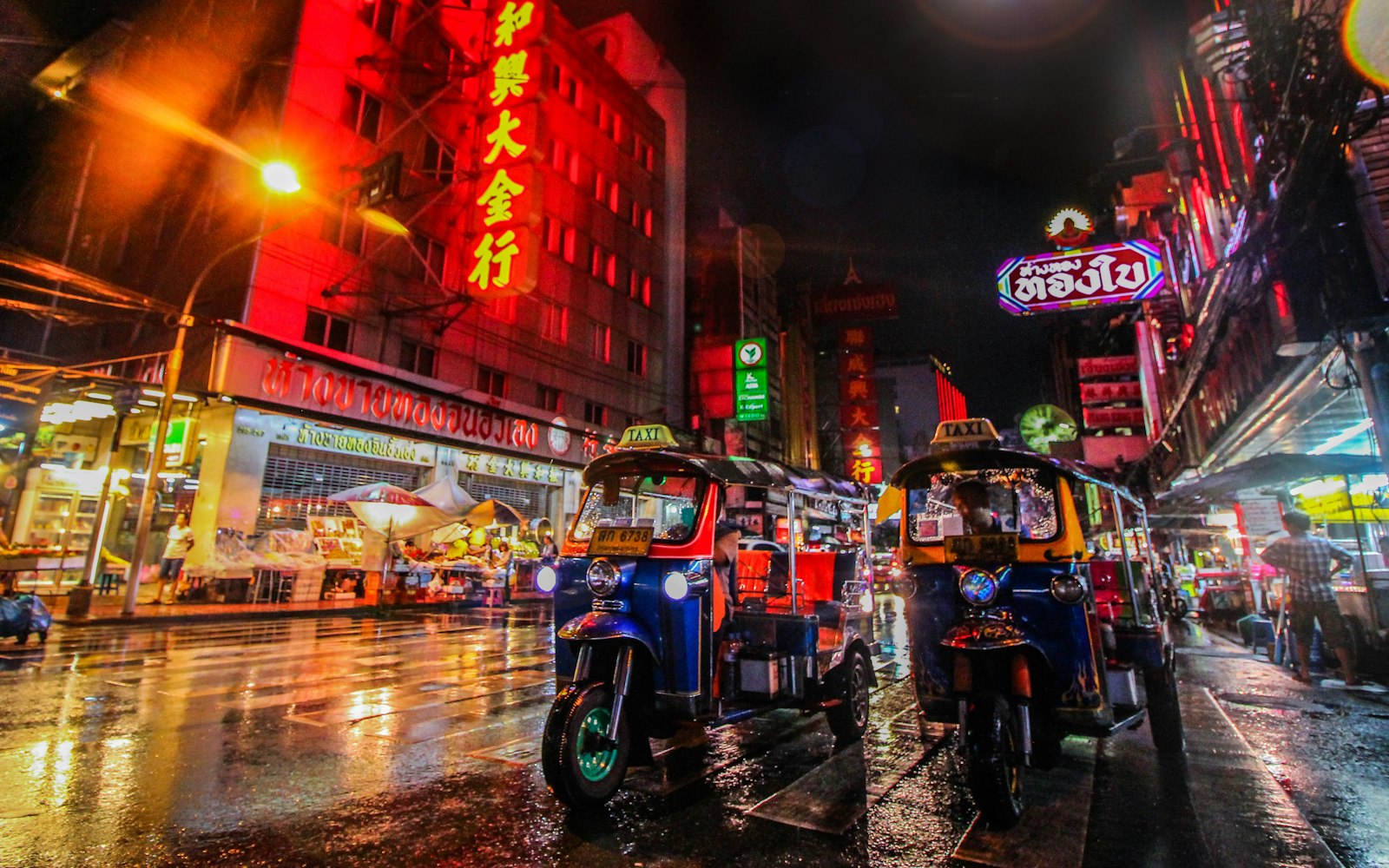
For short hops, tuk-tuks and Thailand’s shared songthaew pickups are part of the fun. Neither uses a meter, so agree the fare before you climb in, and have a rough sense of the going rate first. A quick check on a ride app gives you a fair benchmark to negotiate against.
Crossing between countries overland is common and mostly straightforward, but the visa picture changes constantly. Some nationalities get visa-free entry, others use an e-visa arranged online, and others get a visa on arrival at the border. Rules, costs, and the list of eligible crossings shift without much warning, and land borders sometimes differ from airports. Do not trust a number you read in a forum. Check the current official rules on the destination government’s own site shortly before you travel.
Which mode when
The honest answer is that you will mix all of these on any real trip. Fly the long, dull stretches, take the train where the route is scenic or overnight, and use buses and boats for everything in between. For a sense of how these pieces fit into a working route, see our two weeks in Southeast Asia itinerary.
| Mode | Speed | Cost | Comfort |
|---|---|---|---|
| Budget flight | Fastest over long distances | Cheap if booked early and light | Fine, but airport time and transfers add up |
| Train | Slower, but overnight legs save time | Moderate | Best for long hauls, especially a sleeper berth |
| Bus or minivan | Slowest, most flexible | Cheapest | Variable, from plush VIP coach to cramped van |
Get the apps, pack light for the flights, and treat every posted schedule as a hopeful suggestion rather than a promise. Do that, and moving around this part of the world becomes one of the easiest and most rewarding parts of the trip.