Siem Reap
The easy base for Angkor: sunrise over Angkor Wat, jungle temples, and Khmer food. When to go to Siem Reap and how to plan your temple days.
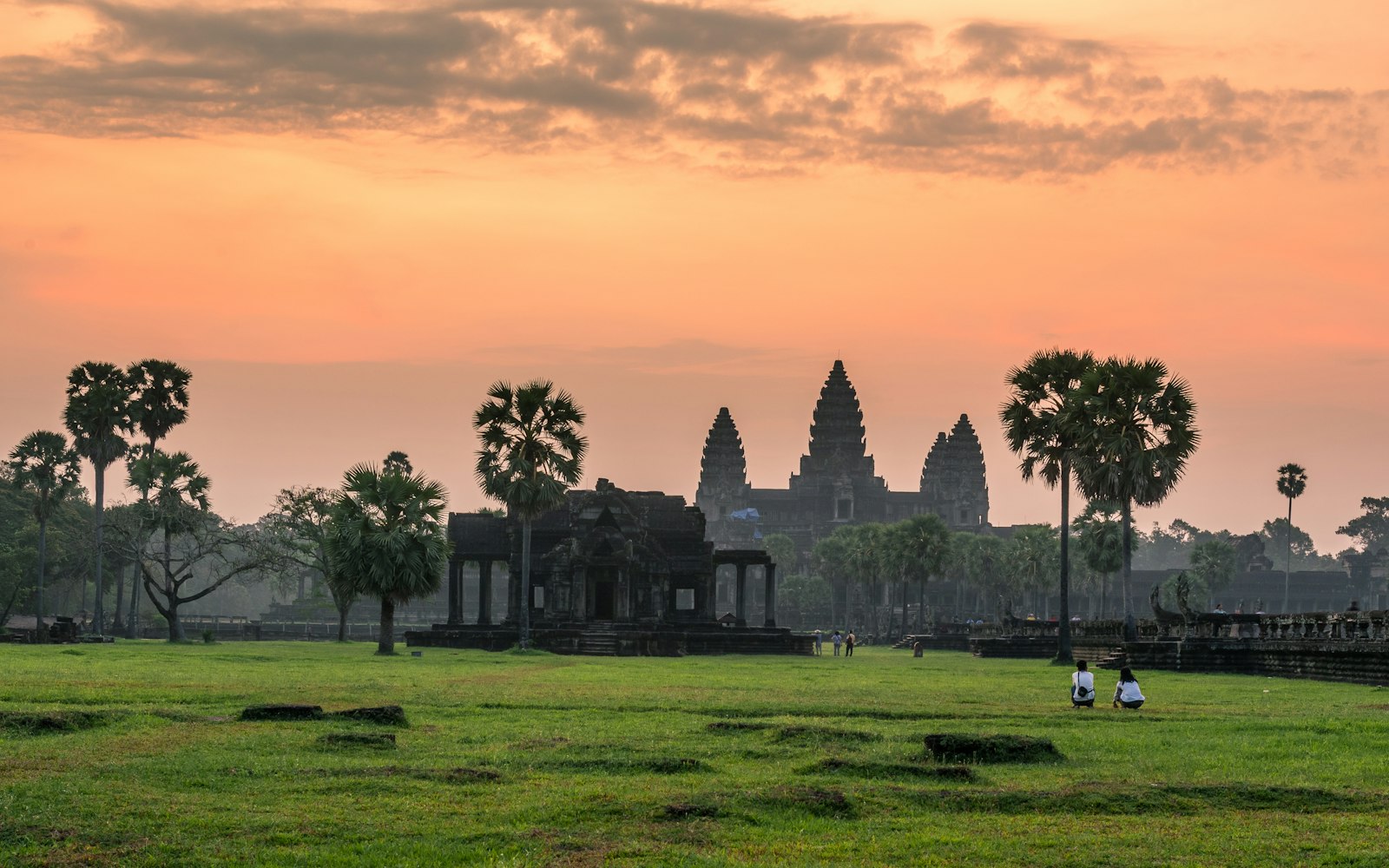
Most travelers come to Siem Reap for one reason, and it is a very good one. A few kilometers north of town lie the temples of Angkor, the sprawling stone capital of the Khmer Empire and one of the great sights anywhere on earth. The town itself is small, flat, and easygoing, a place of riverside cafes and shophouse bars that seems to understand its own job: feed you, rest you, and get you out to the ruins by first light.
That modesty is the charm. You spend your evenings and early mornings here, the hot middle of the day surrendered to a pool or a long lunch. Come with that rhythm in mind and the town rewards you.
When to go
The cool, dry stretch from roughly November to February is the sweet spot. Mornings are pleasant, the light is clean, and walking a temple complex for hours is comfortable. It is also the busy season, so expect company at the famous sunrise spots.
From about March to May the heat turns serious, and midday temple walking becomes punishing; you will want to be back at your guesthouse by lunch. The wet season, broadly the middle and later months of the year, brings afternoon downpours but also green moats, thinner crowds, and softer prices. Rain tends to arrive in short bursts, so it is more manageable than it sounds.
On money: the US dollar is used everywhere alongside the Cambodian riel, and you will often be quoted in dollars and handed riel as small change. Carry clean, smaller bills, and check current entry and visa rules before you fly, since those details change.
What to do
The Angkor Archaeological Park is the reason you are here, and it is vast. Angkor Wat at sunrise is the headline: five towers emerging from the dark as the sky turns pink behind them. It is spectacular and it is crowded, so arrive early.
Just as memorable is the Bayon, its towers carved with dozens of huge, serene faces that seem to watch you from every angle. Then comes Ta Prohm, the temple left half-swallowed by jungle, where the roots of giant fig and silk-cotton trees pour over the walls. These three alone justify the trip, though the park holds dozens more, from the pink carvings of Banteay Srei to quiet ruins you may have to yourself.
To visit, you buy an Angkor pass, sold in single-day and multi-day versions at the official ticket office. A multi-day pass is the sensible choice, since it lets you slow down and avoid temple fatigue. Most people hire a tuk-tuk driver for the day; he runs a circuit for you, waits in the shade, and knows where the light is good and the buses are not.
The park breaks down into two classic loops once you have done the headline three. The Small Circuit, about seventeen kilometers, threads Angkor Wat, Angkor Thom and the Bayon, Ta Prohm, and a handful of smaller temples such as Baphuon and Phimeanakas into a single day’s walk-and-ride, and is the natural shape for a first-timer with a one-day pass. The Grand Circuit stretches the loop out to take in Preah Khan, Neak Pean, Ta Som, and the Eastern Baray, and is the better second-day route for anyone with a multi-day pass and a tolerance for one more mossy ruin. Spread across two mornings, the two loops let you see the famous and the quiet without cramming, and most tuk-tuk drivers know both by heart.
Out on its own, about thirty kilometers north of the main complex, sits Banteay Srei, the small, exquisitely carved pink sandstone temple known for the fineness of its lintels and the depth of its relief. It is worth the drive for the carving alone, which is some of the finest the Khmer ever produced, and the sandstone glows in the late afternoon in a way the grey stone of the main park cannot match. Time it for sunset if your driver is willing, since the return trip in the dark is straightforward on the paved road.
Back in town, evenings gravitate to Pub Street and the lanes around it, a compact, noisy grid of bars, street food, and neon. It is touristy and unashamed of it, fun for a night or two, and the adjacent night market is good for a cheap bite. Seek out fish amok, a mild, fragrant curry steamed in banana leaf, and lok lak, stir-fried beef with rice, a peppery lime dip, and a fried egg. Both are Khmer staples, and both are excellent.
South of town lies the Tonle Sap, the great lake whose floating and stilted villages draw a steady stream of boat tours. Here, care matters. Some operations are exploitative, funneling visitors toward inflated donations and staged poverty. Choose a community-based or clearly reputable operator, ask where your money goes, and be wary of anyone pressuring you into a crocodile farm or an orphanage visit. Done right, it is a real window onto lake life; done wrong, it is a trap.
Where to base yourself
For most first-timers, staying near Pub Street and the Old Market makes sense. You can walk to dinner and meet your driver at the door. The trade-off is noise, so ask for a room set back from the street.
For something calmer, look across the river to the Wat Bo area, a leafier neighborhood of guesthouses and small restaurants, still an easy tuk-tuk from everything. It suits travelers who want temples by day and quiet by night.
Getting around
Siem Reap is walkable at its center and cheap to cross by tuk-tuk. The town has its own airport, and many travelers pair it with Bangkok, a short flight or a long, scenic overland journey away. North along the Mekong, Luang Prabang is the slow, serene counterpoint to Angkor’s stone grandeur, reached by a few flights or, for the patient, a long overland run through southern Laos. If you are stitching together a bigger trip, our guide to two weeks in Southeast Asia shows how the temples fit alongside the region’s other essentials.
Temple days, done well
Long days among the ruins reward a little planning. These are active religious sites, so cover your shoulders and knees; you may be turned away from the upper level of Angkor Wat otherwise. Our temple etiquette guide covers the finer points, but modest, breathable clothing handles both respect and heat at once.
As for the heat, start at dawn, carry more water than you think you need, and aim to finish the hard walking by early afternoon. Sunscreen, a hat, and sturdy shoes for uneven stone all earn their place. Buy water from the stalls near the temples to keep the small vendors going, and take a proper break in the worst of the midday sun rather than pushing through it.
Siem Reap does not try to compete with the temples, and that is exactly why it works. Give it a few unhurried days, let the mornings do the heavy lifting, and it sends you home rested and a little awed.
Line up the season with our guide to the best months to visit Southeast Asia, then sort transport withgetting around the region.