Temple etiquette and cultural do's and don'ts
Temples across the region are living places of worship, not backdrops. What to wear, how to behave, and the cultural rules that keep you from causing offense.
The incense is what you notice first. Then the sound of bare feet on cool stone, a low murmur of chanting somewhere out of sight, and an older woman on her knees setting down a small tray of flowers. You have walked into a working temple, not a monument, and the people around you are here to pray.
That single fact should shape how you move through these spaces. Across Southeast Asia the great religious sites are alive, and treating them as photo backdrops is the fastest way to mark yourself as a careless guest. The rules are mostly common sense, and learning a few of them opens doors that stay shut to everyone else.
Why the rules exist
The region holds three great religious traditions, and their sacred buildings often sit side by side. Gilded Buddhist temples anchor Thailand, Cambodia, Laos, and Myanmar. Hindu shrines cover Bali and dot the ruins of old kingdoms. Mosques fill the towns of Malaysia, Indonesia, and southern Thailand. What they share is that almost all of them are in daily use. Monks live at the Buddhist ones, families bring offerings to the Hindu ones, and communities gather several times a day at the mosques.
So the etiquette is not a tourist tax invented to trip you up. It is the same courtesy locals show one another, extended to you. Get it roughly right and people warm to you fast. Get it wrong and, at best, someone quietly asks you to leave.
What to wear
The baseline almost everywhere is simple: cover your shoulders and your knees. Tank tops, short shorts, and cropped tops will get you turned away at the gate. Carry a light sarong or a scarf in your day bag. It weighs nothing, doubles as sun cover, and saves you from renting a scratchy wrap at the door.
Shoes come off before you step onto sacred ground, and so do hats. Watch where locals leave their sandals and do the same. Expect the holiest sites to ask for more: long trousers, covered arms, sometimes a specific sash. Festival season tightens all of this, so if you are timing a visit around a major celebration, read our guide to festivals across Southeast Asia and pack accordingly.
How to behave inside
Lower your voice and silence your phone. Move along the edges rather than straight through the middle, where people may be praying. If you sit, tuck your legs to the side rather than stretching them out in front of you.
Around Buddha images there are firm lines. Do not climb on statues, walls, or ruins for a better angle, and never sit on a Buddha figure for a photo. This is a real temptation at the vast stone complexes near Siem Reap, where a low wall looks like a bench and a carved doorway looks like a frame. It is neither. Do not turn your back on a principal image to pose for a selfie in front of it. If you want the shot, stand to the side and keep the figure in respectful view.
Feet, heads, and monks
One idea runs through the whole region and explains half the rules on its own. The feet are considered the lowest, least clean part of the body, and the head the highest and most sacred. That is why pointing the soles of your feet at a person, a monk, or a Buddha image reads as an insult. Sit so your feet point away from anything holy. It is also why you never pat a child on the head, however sweet the moment feels.
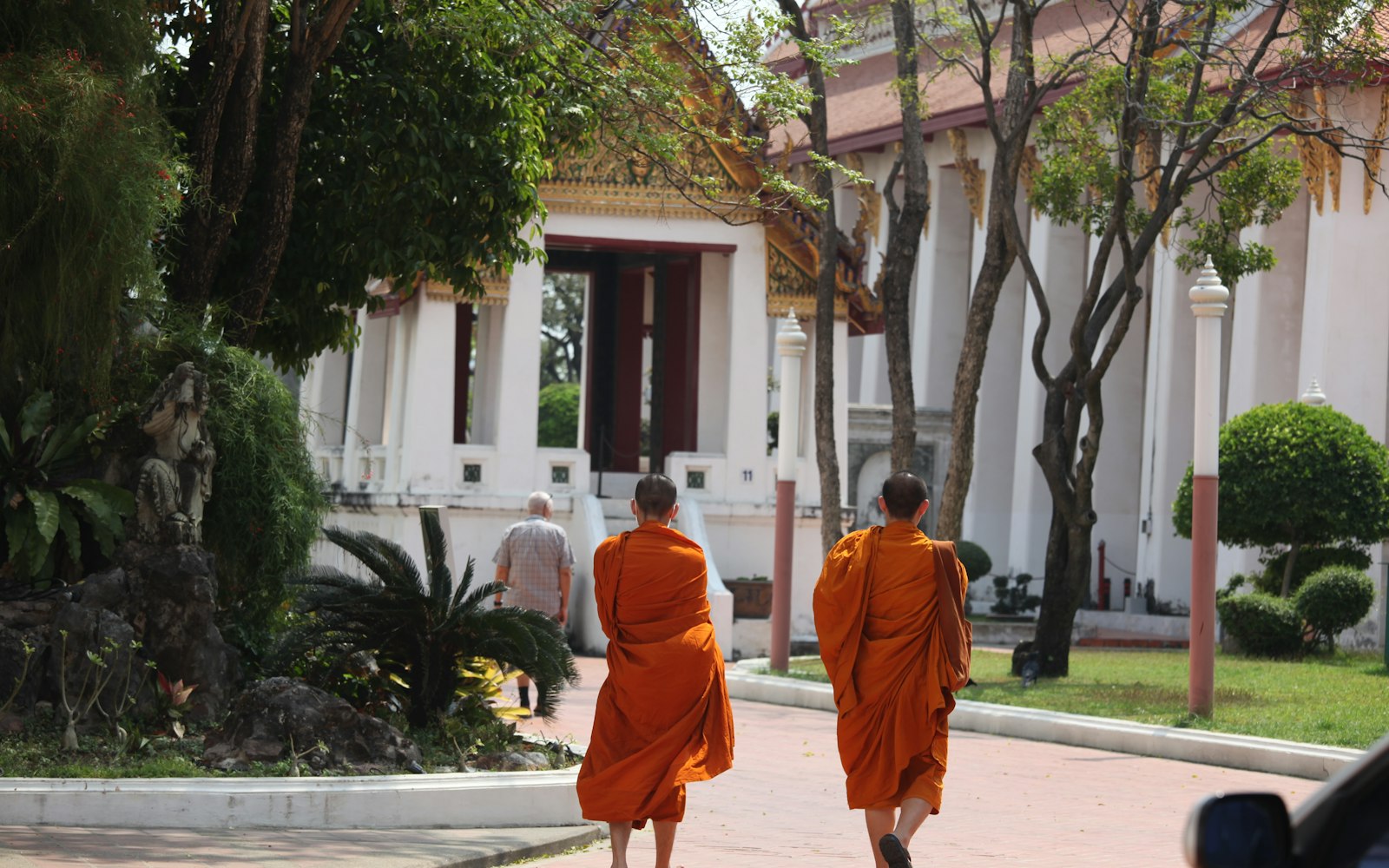
Monks deserve their own care. Keep a respectful distance and let them pass. In many Theravada traditions a woman should not touch a monk or hand anything to him directly; she places the item down or passes it via a man or a cloth the monk lays out. This is not personal, and monks are used to signalling it gently. Follow their lead.
Offerings, alms, and mosques
In Bali you will soon learn to watch your step. Those small woven trays of flowers, rice, and incense on doorsteps and pavements are canang sari, daily offerings, and treading on one is a genuine misstep. At temple gates you may be given or asked to rent a sarong even if you are already dressed modestly, because Balinese temples keep their own dress code. Our Bali guide goes deeper on which sites welcome visitors and which stay closed.
The dawn alms round is one of the region’s quietest wonders, and Luang Prabang is where most travellers witness it. Monks walk in single file to receive rice from kneeling residents. The etiquette here has grown strict for good reason, as busloads of visitors have turned a sacred ritual into a scrum. Watch from across the street, stay quiet, keep your flash off, and do not crowd or block the line. Join in only if you genuinely understand the ritual and have been shown how.
At a mosque, dress modestly, and note that women may be asked to cover their hair while everyone removes their shoes. Mind the prayer times, when non-worshippers may be asked to wait outside, and follow the signs at the entrance.
Photography
A working shrine is not a free-for-all for your camera. Ask before you photograph people, monks, or a ceremony in progress, and accept a no gracefully. Look for no-photo signs, which often mark the most sacred inner rooms, and respect them even when no guard is watching. Never use a monk or a praying local as an unwitting prop. A raised camera and a questioning look does the asking for you, and the yes you get that way is worth far more than a stolen frame.
None of this asks you to tiptoe. Move slowly, watch what the people around you do, and copy them. Do that and these places stop being sights you tick off and start being somewhere you were genuinely welcome.