Bangkok to Chiang Mai: the slow overland route
How to travel from Bangkok to Chiang Mai without flying, with stops at Ayutthaya, Lopburi, and Sukhothai. Train times, pacing, and what is worth a day.
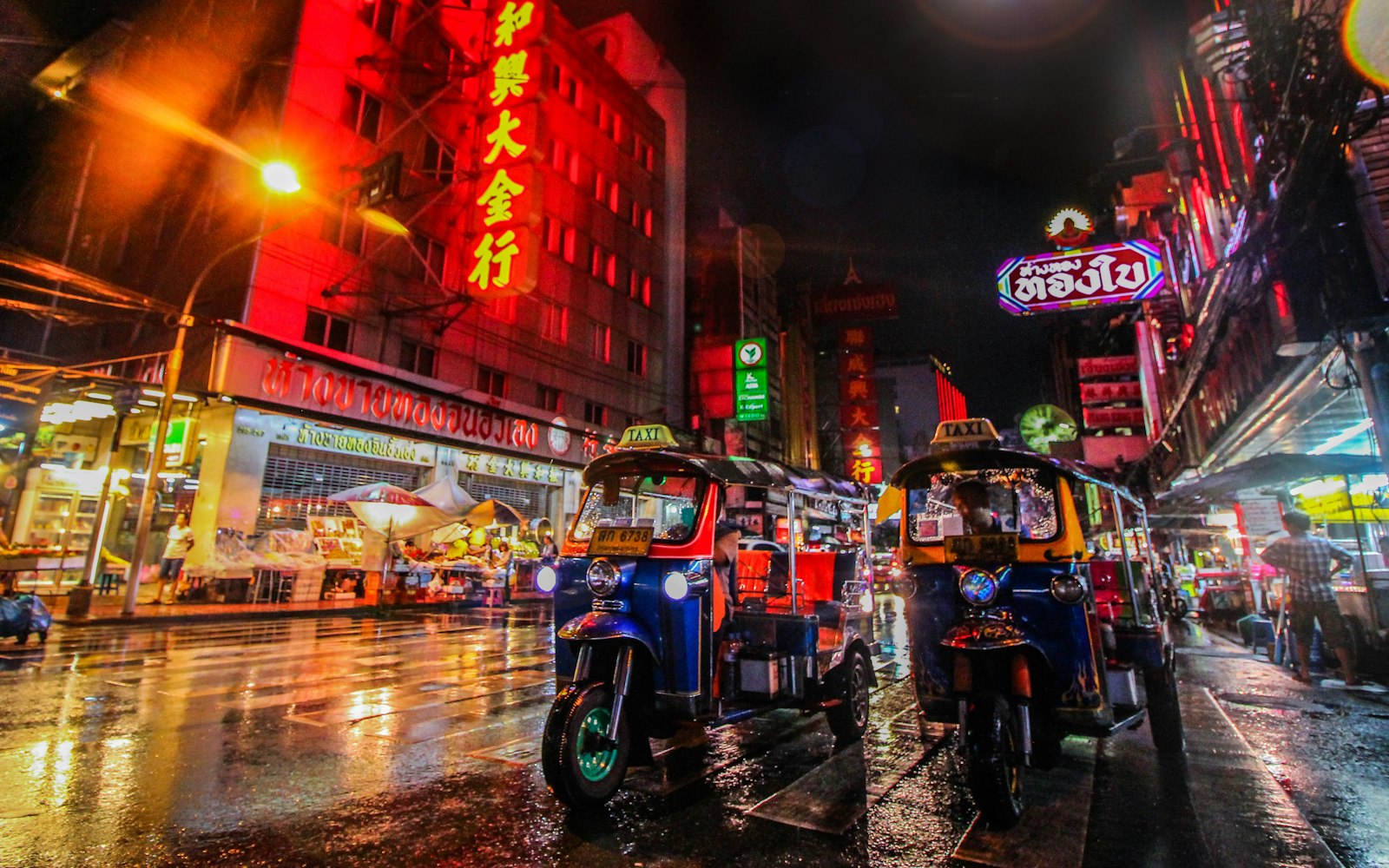
The flight from Bangkok to Chiang Mai takes about ninety minutes and costs less than a decent dinner, so why would anyone spend four or five days covering the same ground overland? Because the slow way turns out to be the whole point. The north of Thailand is not a destination separated from the south by a security queue. It is a gradual shift of temperature, language, food, and light, and the overland route lets you feel the country changing under your wheels instead of skipping past it at altitude.
This is also one of the easiest overland routes in Southeast Asia. Thailand’s rail network is the region’s most civilized, the overnight sleeper is a small classic of travel writing for good reason, and the stops along the way, the old capitals of Ayutthaya and Sukhothai and the monkey town of Lopburi, are exactly the kind of places people say they wish they had time for. Here is how to give them that time.
How to think about the route
Two shapes work well. The relaxed version runs Bangkok to Chiang Mai over five to seven days, with two or three real stops and a sleeper train for the long leg north. The tighter version drops a stop or two and fits in four days, but it loses some of the breathing room that makes this route worth doing. Anything faster than that and you should just fly.
The cardinal rule is to avoid backtracking. The train line runs roughly north from Bangkok through Ayutthaya and Lopburi, then onward toward the northern cities. Sukhothai sits off the rail line and needs a bus or a hired car from Phitsanulok, the nearest major station, so it is the one stop that asks for a small detour. Plan the order around that, not against it.
When to go
The comfortable window is the cool dry stretch from roughly November to February, when the heat backs off and the air over the central plain is clear enough to see across the rice paddies. The hot months from March to May are punishing, and from March into April the north sits in field-burning smoke that can turn the mountain views to grey haze. If your dates are flexible, skip the burning weeks; if they are not, check current air quality before you commit. The monsoon from about June to October brings short heavy downpours, mostly in the afternoons, and rarely stops you doing much.
Read our wider guide to the best time to visit Southeast Asia if you are stitching this route into a longer trip, since the seasons tilt differently the moment you cross into Laos, Vietnam, or Cambodia.
Stop one: Ayutthaya
About ninety minutes north of Bangkok by local train, Ayutthaya was the capital of the Siamese kingdom for over four centuries until it was sacked in the late eighteenth century. What is left is a UNESCO-listed field of brick temple towers and monastery ruins set on an island between three rivers, and it earns its reputation best in the soft light of early morning or late afternoon, when the brick glows and the crowds are thinner.
The slow way in is by train from Bangkok’s Hua Lamphong or the newer Bang Sue station, which dumps you across the river from the old town for the price of a coffee. From there, the ruins are spread across the island, so the practical move is to hire a bicycle or a tuk-tuk for the day rather than walk. The must-sees are Wat Mahathat, where the famous sandstone Buddha head is cradled in the roots of a banyan tree, and Wat Chaiwatthanaram, a riverside Khmer-style complex that is at its best at sunset. Two nights is plenty. One will do if you are tight on time.
The Bangkok destination guide covers Ayutthaya as a day trip from the city, but the point of the overland route is that you do not have to rush back. Sleep here, watch the ruins empty at dusk, and carry on north in the morning.
Stop two: Lopburi
A couple of hours further north by train, Lopburi is the one nobody tells you about and one of the more memorable stops on the line. It is best known for its macaques. Hundreds of them live in and around the old Khmer shrine of Prang Sam Yot in the center of town, and they more or less own the intersection. Bring nothing shiny, keep your bag closed, and treat the whole thing as theatre rather than a photo op; the monkeys are wild animals, not performers.
Lopburi also has the ruins of a royal palace and a quiet old station quarter that rewards a slow walk. It works as a half-day stop on the way through, or as an overnight if you want to break up the train ride. Most travelers pass through it in a few hours and catch the next train north, which is fine too.
The detour: Sukhothai
Sukhothai is the longer stop and the one that asks for planning. The ruins of the first capital of Siam sit in a historical park about twelve kilometers from the modern town of Sukhothai and about an hour’s drive from Phitsanulok, the nearest railhead. The park itself is a low, leafy scatter of temples, ponds, and lotus pools, with the giant seated Buddha of Wat Mahathat at its heart, and it is best done by rented bicycle in the cool of the morning.
The honest trade-off is distance. From Lopburi you take the train to Phitsanulok, then a bus or hired car to Sukhothai town. It is half a day of travel each way, so it only makes sense if you commit to two nights and give the park a full day. Skip it if you are tight on time, or if you have already seen Angkor or Bagan, since the comparison can blunt the impact.
The sleeper train north
This is the romantic part, and it deserves the reputation. The overnight sleeper from Bangkok (or from Phitsanulok, if you have done the Sukhothai detour) to Chiang Mai takes roughly twelve to fourteen hours, depending on the service, and turns the long haul into a memory rather than a chore.
The carriage layout is part of the pleasure. By day, each berth is a pair of forward-facing seats with a shared table. Around dusk an attendant walks through folding the seats down into sleeping bunks, hanging curtains, and laying out a clean sheet, pillow, and blanket. You wake somewhere in the northern hills, the air cooler through the window, and a few hours later the train rolls into Chiang Mai’s old station, a short hop from the moat.
A few practical notes. The lower bunk is wider and steadier and easier to get in and out of, and it costs slightly more, so book early if you want one. The air conditioning runs cold, so pack a layer even in the hot months. Tickets open for advance sale and the sleeper fills on popular nights, especially around weekends and holidays, so reserve ahead rather than turning up at the station. The State Railway of Thailand’s own site and ticket counters are the safe sources; verify current timetables and fares there before you plan, since schedules change.
Arrival: Chiang Mai
Step off the train and the temperature is already a few degrees lower than Bangkok, the skyline lower, the air softer. Chiang Mai’s old city is a near-square of lanes and temple roofs ringed by a moat, with the forested bulk of Doi Suthep rising to the west, and it asks for three to five days at a minimum. The full Chiang Mai destination guide covers what to do once you arrive: the temple circuit inside the moat, the golden chedi at Doi Suthep, the cooking classes, the Sunday Walking Street, and the gentler clock the north runs on.
A useful temptation to resist is treating Chiang Mai as a base for everything. Treks into the hill-tribe country, the elephant sanctuaries, and the long loop out toward Pai and Mae Hong Son all eat days, and they deserve those days rather than a rushed afternoon. If you want the mountains, give them the back end of your trip, not the middle.
A note on doing the route well
Two small things make the difference. The first is pacing. The temptation on a route like this is to add one more stop, one more ruin, one more town, until the trip becomes a transit marathon. Resist. Two real stops plus the sleeper is plenty for a week, and the towns reward an unhurried afternoon more than another box ticked.
The second is respect. The temples along the way, from Ayutthaya’s ruined towers to the working wats inside Chiang Mai’s moat, are religious sites first and visitor attractions second. Cover your shoulders and knees, take your shoes off where asked, keep your voice low, and read our primer on temple etiquette across Southeast Asia before you go. The same applies at festival time: the north’s great lantern celebrations of Loy Krathong and Yi Peng fall in the cool season, and our guide to the region’s festivals explains the dates and what to expect.
Done well, the Bangkok-to-Chiang Mai overland route is not a way to save a flight. It is a way to meet the country at ground level, watch the south give way to the north, and arrive in the old Lanna capital feeling like you have traveled somewhere, not just appeared there.